The capture experience
I built the application and capture workflows that turn natural language into records by area. Users can review the information before confirming it.
Personal product · Built end to end
I built Ascende to bring finances, body and mind into one product. The central idea is simple: describe your day in natural language, then review the records the app helps create from that conversation.
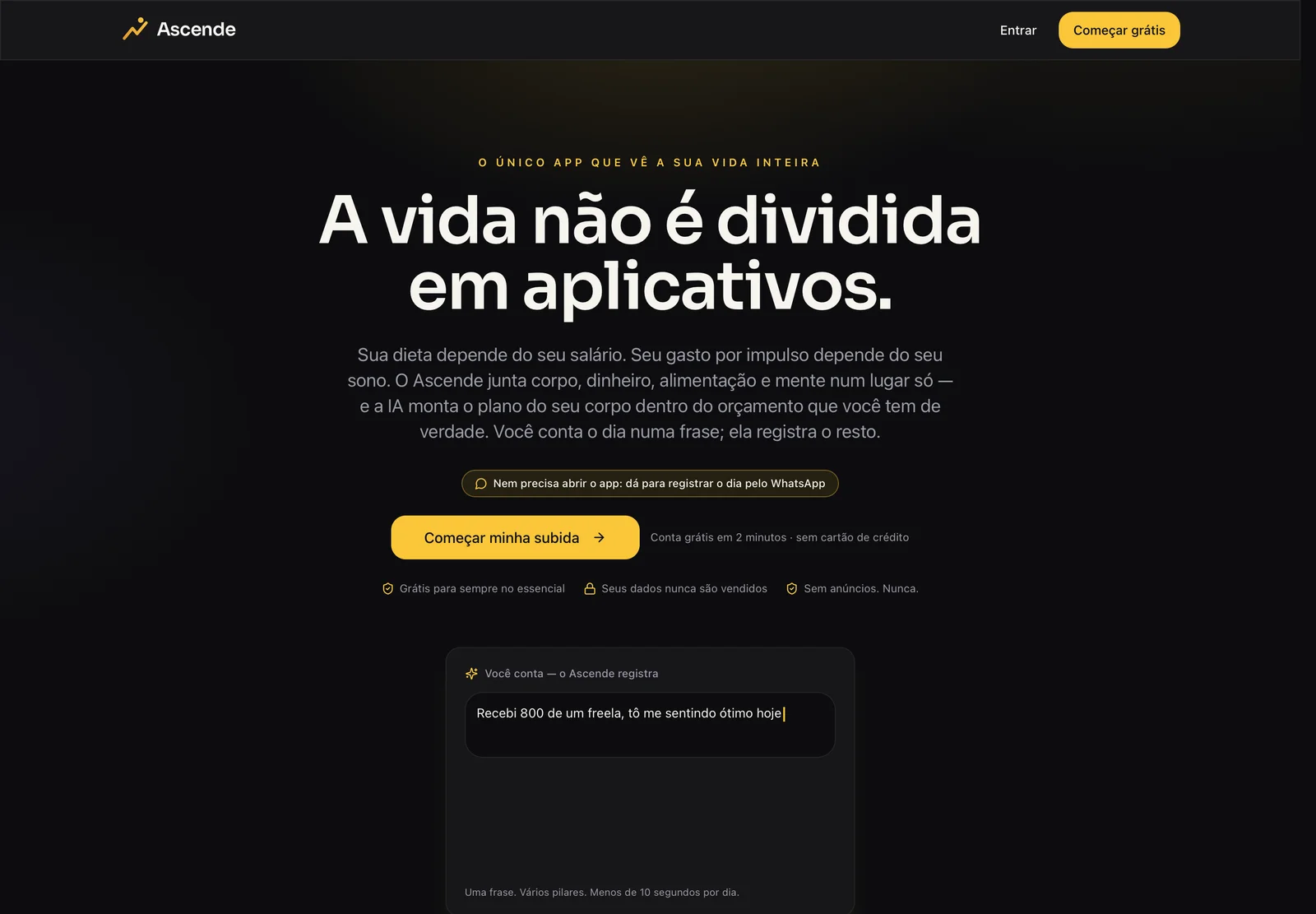
When each part of life lives in a different app, recording a day means repeating tasks and switching screens. Ascende starts from a different interaction: a sentence can contain an expense, a workout and sleep information.
The product challenge is organizing that information without forcing the user to start with a form. The technical challenge is connecting capture, review, persistence and context for the AI advisor.
My contribution
I built the application and capture workflows that turn natural language into records by area. Users can review the information before confirming it.
The product brings together authentication, persistent data and an advisor working with account context. React and TypeScript power the app; Supabase provides the database, authentication and server functions.
Project documentation covers the Claude API, Netlify deployment and imports from Apple Health exports and CSV files. The public website also describes WhatsApp capture and conversation.
“I spent R$47 on groceries, trained legs and slept 6 hours.”
R$47 at the grocery store
Leg workout
6 hours of sleep
Illustrative example with fictional data. These cards explain the workflow; they are not a screenshot of a real account.
The outcome
Ascende is available online with a public product presentation, account access and a defined use case. It demonstrates my ability to connect user experience, software and AI in a product of my own.
The evidence in this case study is the published product. Features were checked against the public page and project documentation; authenticated workflows were not audited for this presentation.
I can start with an interaction idea and build the parts that support it: interface, data, authentication, AI functions and deployment. The goal goes beyond generating an answer to bringing information into a product someone can return to.
Henrique Pett’s personal project, not a studio client. Technical content is based on the project repository and documentation, alongside its public page.
Case study prepared October 14, 2026.
Let’s define the first user journey, the role of AI and the criteria for putting it in users’ hands.